Discovering the Maedeng Tradition in Payangan: A Sacred Ritual Unique to Banjar Susut
A Unique Tradition Found Only in Banjar Susut
Unlike many other ceremonies practiced across Bali, Maedeng is believed to exist only in Banjar Susut, making it a distinctive cultural heritage of the local community.
The ritual is conducted by villagers of Desa Adat Susut in Buahan Village as part of their preparations for Tawur Kesanga, a major purification ceremony held on the eve of Nyepi.
For the people of Banjar Susut, Maedeng is more than a preparation ritual — it is a communal responsibility that reflects their dedication to preserving balance between humanity, nature, and the spiritual realm.
The Story Behind the Tradition
According to stories passed down through generations, the origin of the Maedeng ritual is closely tied to the geographical and spiritual position of Banjar Susut.
The village is located at the far end of an area locally known as “ancut,” meaning the last or outer edge of the settlement. Because of this location, the area was traditionally considered somewhat tenget, or spiritually sensitive.
Banjar Susut also sits near the meeting point of two sacred rivers:
- Ayung Istri River flowing from the west
- Ayung Lanang River flowing from the east
In Balinese belief, the meeting of these two rivers symbolizes the union of feminine and masculine energies in nature.
Long ago, the village was said to have experienced a severe gering, or outbreak of disease. In response, the villagers made a sacred sesangi — a spiritual vow — asking for protection and healing.
The community promised that if the village could be freed from the outbreak, they would perform special offerings during Tawur Agung Kesanga each year.
As part of this vow, the villagers would offer symbolic elements known as “kuku rambut” (nails and hair), representing purification and renewal, along with sacred animal offerings.
Within this ritual structure:
- A male calf (godel muani) is offered at the village’s main crossroads (perempatan agung)
- A female calf (godel luh) is offered at Pura Dalem Susut
These offerings symbolize balance and harmony between opposing forces in the universe.
A Community Gathering Rooted in Tradition
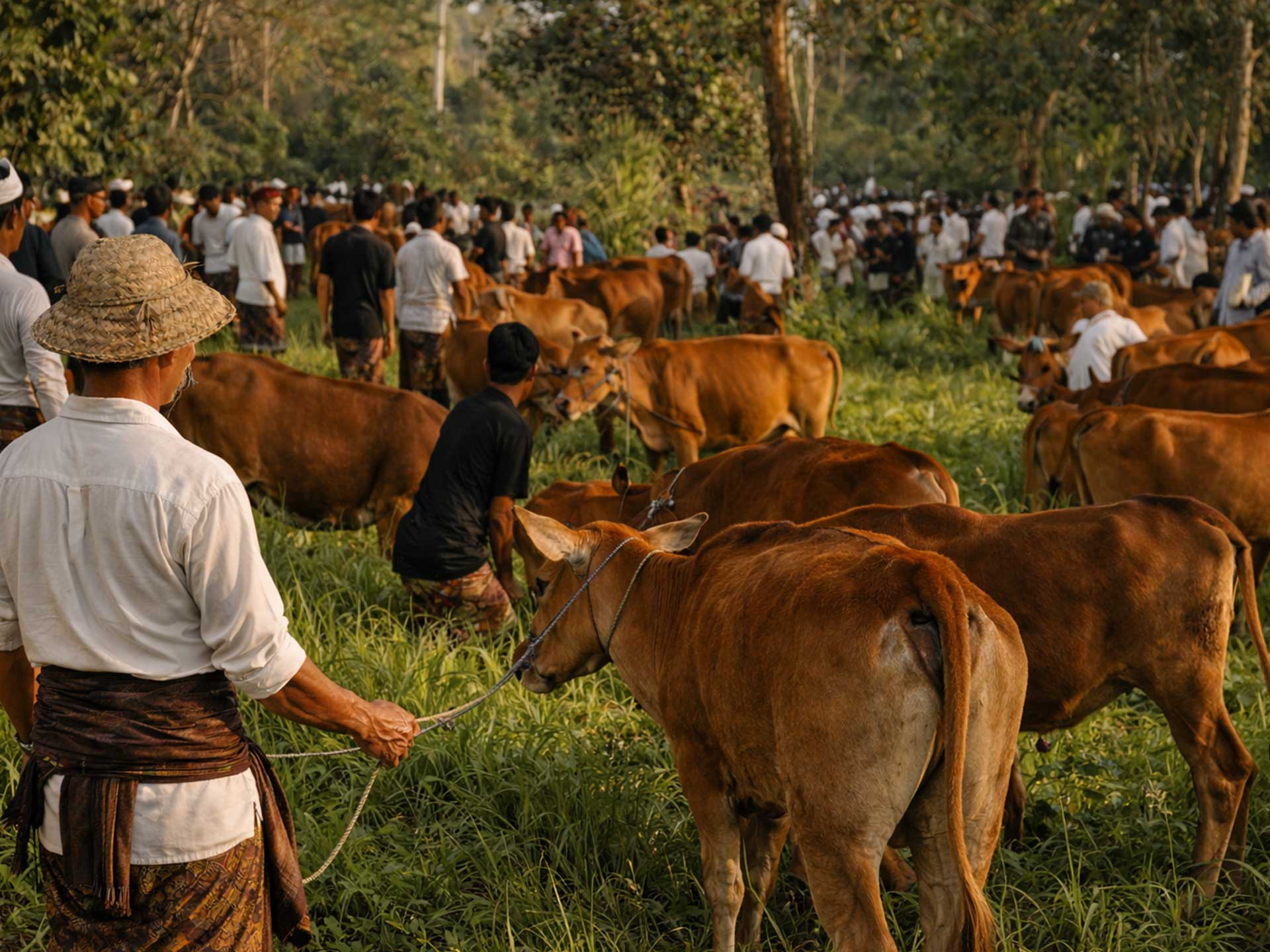
The Maedeng ritual begins early in the morning, when villagers who own cattle bring their animals to the setra, the village cemetery area, a place considered spiritually significant in Balinese belief.
By around 7:00 AM, farmers, community members, and traditional leaders known as prajuru adat gather to begin the selection process.
Each animal is carefully inspected because the chosen cattle will later become ulam caru, ceremonial meat offerings used during Tawur Kesanga.
Due to the sacred role of these offerings, the animals must meet strict traditional criteria.
The selection process typically continues until around 10:00 AM, after which farmers may take their cattle home again — except for those selected for the ceremony.
Selecting the Sacred Offering
Within the Maedeng tradition, the calves selected must be healthy, physically perfect, and free from visible defects, including irregularities in their fur or body.
Both male and female calves may be chosen, symbolizing balance within the ceremonial offerings. Village leaders first nominate several candidates before narrowing them down to the most suitable animals.
For the villagers, having their cattle selected is seen as a meaningful honor.
Traditionally, the village does not purchase animals from outside the community. Instead, the offerings must come from livestock raised by local farmers, strengthening the communal spirit behind the ritual.
Although the animals belong to the farmers, the community accepts the decision with sincerity, understanding the deep spiritual purpose behind the offering. The village customary leaders also provide compensation to the livestock owners as a gesture of respect.
Preparing for Tawur Kesanga
Once the Maedeng ritual is completed, the community gathers for a samuan, a traditional village meeting held at Pura Dalem, the temple associated with ancestral and spiritual balance.
During this gathering, villagers coordinate preparations for the upcoming Tawur Kesanga ceremony. The selected calves will later be prepared as ritual offerings on Pangerupukan, the day before Nyepi.
The ceremonial preparation takes place within the sacred grounds of Pura Dalem before the offerings are presented at spiritually important locations throughout the village, including the Catus Pata Banjar, the central crossroads believed to hold strong symbolic meaning in Balinese cosmology.
After the ceremony is completed, the prepared meat is distributed among households according to the number of families within the community.
Experiencing Living Culture in Payangan
Despite the rapid development across many parts of Bali, villages like Payangan remain deeply rooted in their traditions.
Rituals such as Maedeng continue to be preserved not only as cultural heritage, but also as part of the community’s spiritual responsibility to maintain harmony between the seen and unseen worlds.
For travelers exploring the peaceful highlands of Payangan, these traditions offer a rare glimpse into Bali’s living culture — one that continues to thrive quietly within village life.
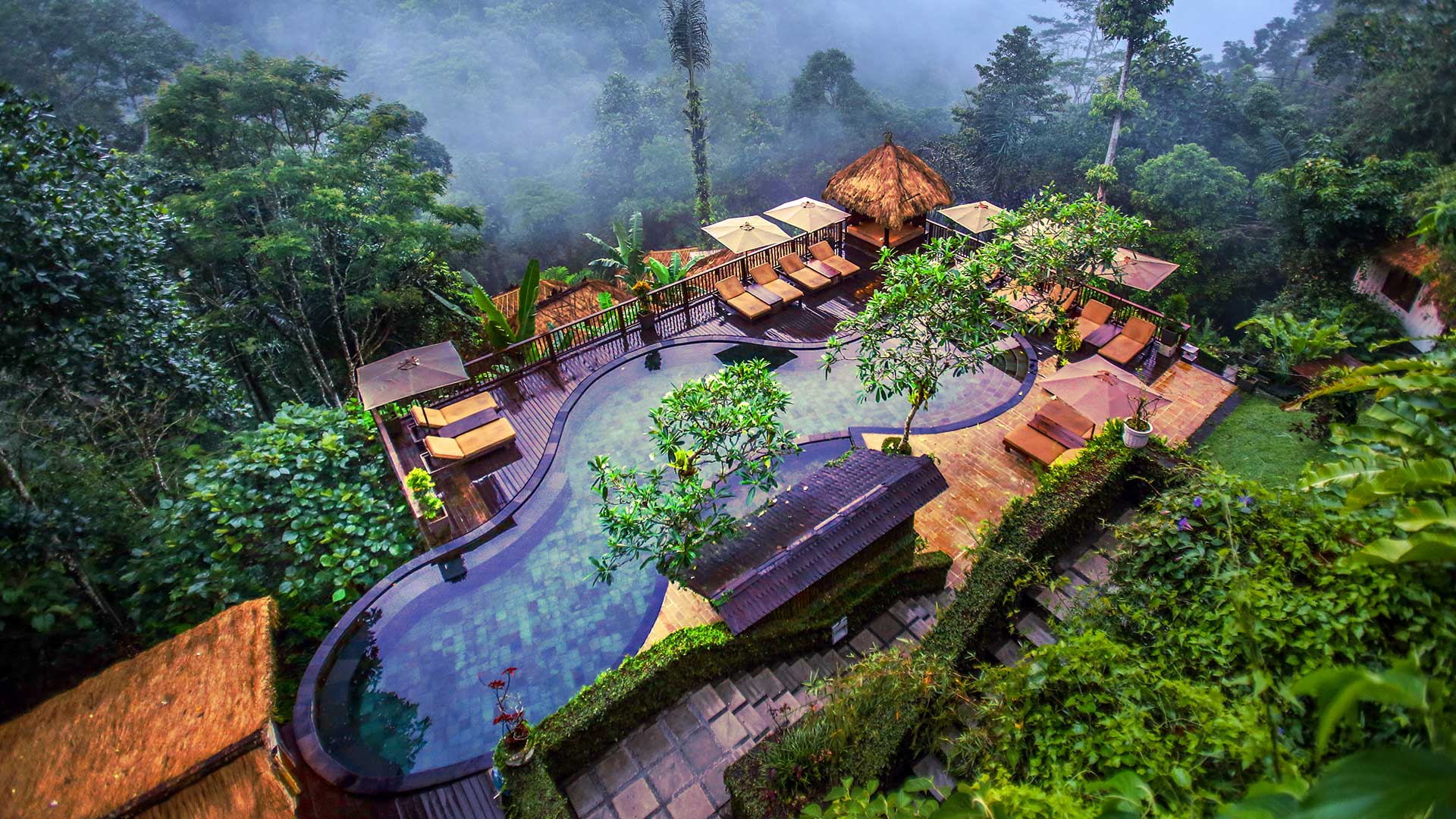
Guests staying at Nandini Jungle by Hanging Gardens may find themselves surrounded not only by lush jungle landscapes, but also by a community where centuries-old traditions are still lovingly preserved.
In Nandini Jungle by Hanging Gardens, culture is not simply remembered — it is lived every day.