
Nyepi Bali: The Meaning Behind the Island’s Day of Silence
Nyepi is one of the most profound cultural observances in Bali. Often referred to as the Day of Silence, Nyepi marks the Balinese New Year according to the ancient Saka calendar. Unlike New Year celebrations elsewhere in the world, Nyepi is defined not by noise or festivity, but by silence, restraint, and deep reflection observed collectively across the entire island.
For many visitors, Nyepi offers a rare opportunity to witness how spiritual values shape everyday life in Bali—where tradition is not symbolic, but actively practiced.
The Spiritual Meaning of Nyepi
At its core, Nyepi is about resetting balance. Balinese Hindu philosophy emphasizes harmony between:
- Humans
- Nature
- The spiritual realm
Nyepi is believed to cleanse negative energies accumulated over the past year and prepare both individuals and the island itself for renewal. Silence is not viewed as emptiness, but as a powerful space for awareness and self-control.
This philosophy is expressed through Catur Brata Penyepian, four sacred disciplines observed during Nyepi:
- Amati Geni – refraining from fire and artificial light
- Amati Karya – refraining from work
- Amati Lelungan – refraining from travel
- Amati Lelanguan – refraining from entertainment and indulgence
These rules apply to everyone in Bali, regardless of nationality or belief.
The Rituals Surrounding Nyepi
Nyepi is not a single-day event but part of a larger ceremonial cycle.
Melasti: Purification Before the New Year
Several days before Nyepi, Balinese communities gather for Melasti ceremonies, traveling to the sea or sacred water sources. Religious objects from temples are purified, symbolizing the cleansing of the physical and spiritual world.
Ogoh-Ogoh: Confronting Negative Forces
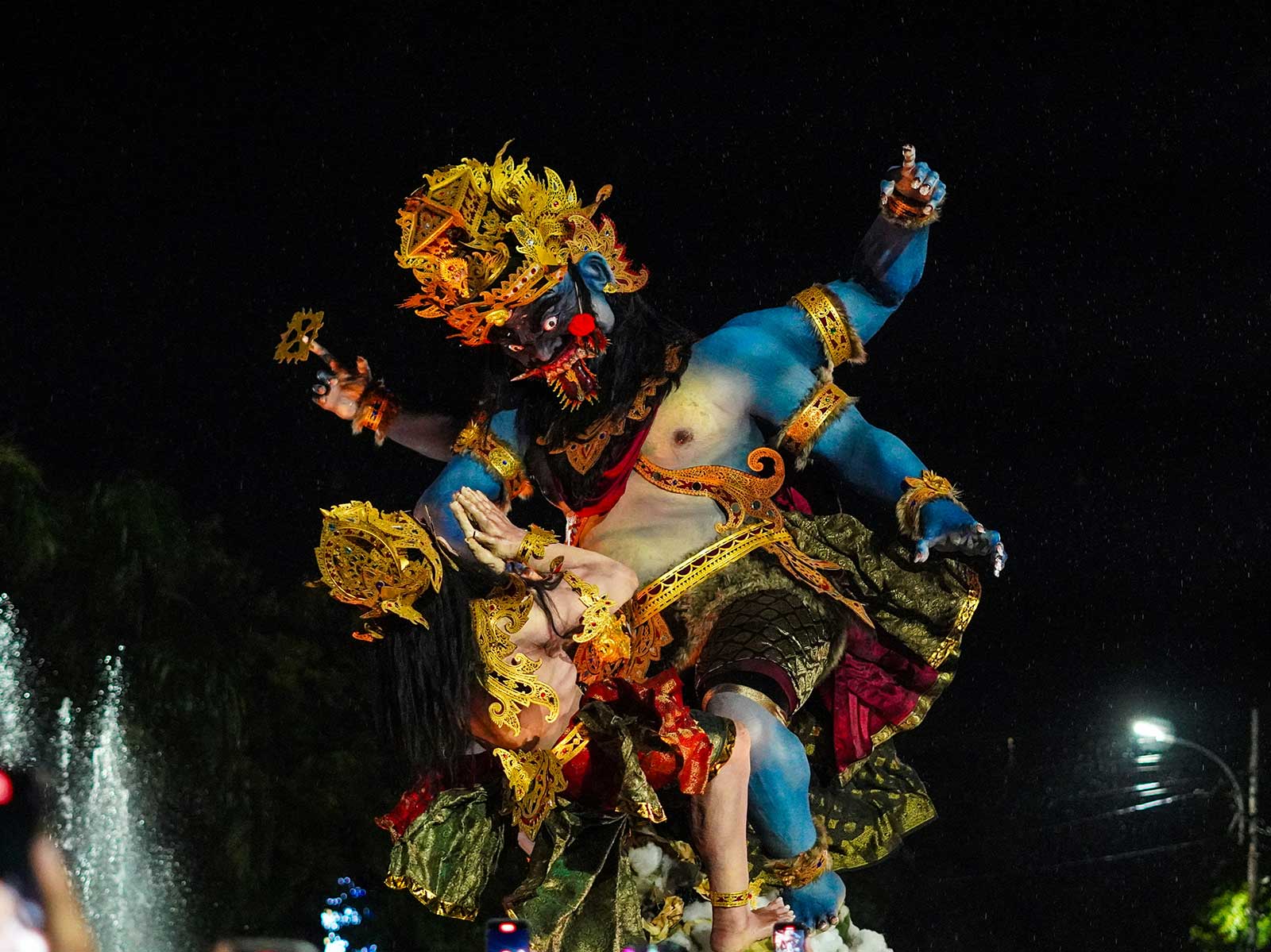
On the evening before Nyepi, villages hold the Ogoh-Ogoh parade. Large effigies representing negative forces are carried through the streets in dramatic processions. The ritual symbolizes acknowledging and neutralizing harmful energies before entering the New Year in silence.
Nyepi Day: Total Stillness
From sunrise to sunrise, Bali comes to a near-complete stop. Airports close, roads are empty, businesses shut down, and even beaches fall silent. Artificial lighting is minimized, and residents remain indoors.
Ngembak Geni: Renewal and Reconnection
The day after Nyepi is a time for forgiveness, family visits, and rebuilding social harmony—marking a fresh emotional and spiritual beginning.
What Actually Happens in Bali During Nyepi
Nyepi is unique because it is enforced collectively:
- No vehicles are allowed on the roads
- Outdoor activity is prohibited
- Internet and mobile services may be limited
- Public entertainment ceases
- The night sky becomes exceptionally clear due to minimal light pollution
Traditional village guards, known as Pecalang, respectfully ensure that the observance is maintained.
Nyepi and Travel: What Visitors Should Know
Travelers are allowed to stay in Bali during Nyepi, but must follow the same restrictions as residents. Hotels and resorts adapt operations accordingly, usually providing:
- In-room dining
- Quiet indoor activities
- Subdued lighting and sound
For visitors staying in quieter regions such as Ubud or Payangan, Nyepi is often experienced as peaceful rather than limiting. Accommodations surrounded by nature—such as jungle or river-valley settings—tend to align naturally with the contemplative atmosphere of the day, including resorts like Nandini Jungle by Hanging Gardens.
Why Nyepi Matters Beyond Religion
Nyepi is increasingly viewed as relevant beyond its religious roots. In a modern world shaped by constant movement and consumption, Nyepi demonstrates the power of collective pause—where an entire society chooses silence, simplicity, and reflection over productivity.
For many visitors, witnessing Nyepi offers insight into why Balinese culture remains deeply rooted, resilient, and distinct.
A Rare Perspective on Bali
Nyepi reveals a side of Bali that cannot be experienced at any other time of year. It is a reminder that the island’s identity is shaped not only by landscapes and hospitality, but by values of balance, respect, and mindful living.
Understanding Nyepi allows travelers to engage with Bali more thoughtfully—seeing the island not just as a destination, but as a living cultural ecosystem.
Experiencing Nyepi in a More Intentional Way
For some travelers, Nyepi becomes more than an observation—it becomes a personal retreat. With movement paused and the outside world quiet, the day naturally invites reflection, slow rituals, and meaningful stillness.
Staying in a setting surrounded by jungle, valley views, or open skies can deepen that experience. In nature-filled environments, silence feels less restrictive and more restorative—allowing guests to align with the island’s rhythm rather than simply observing it.
In line with this spirit, a limited Balinese Silence Retreat is offered during Nyepi 2026, thoughtfully designed for those who wish to embrace the day with comfort while still honoring its essence.
Stay Period: 18 – 20 March 2026
(Including 19 March – Nyepi Day)
Rather than adding activity to the silence, the retreat gently complements it through quiet, culturally rooted experiences and mindful comforts.
During Nyepi Day, guests may enjoy:
- A 3-course lunch for two
- An Indonesian Rijsttafel dinner for two
- A light poolside snack
- A Balinese “Canang” offering crafting session
Throughout the stay, the experience remains intentionally unhurried, with inclusions such as daily breakfast, afternoon tea, a sunset yoga session, village and cycling tours (scheduled outside Nyepi hours), and subtle wellness touches like spa savings and personalized in-villa moments.
The setting encourages stillness without isolation—allowing guests to feel cared for while respecting the island-wide observance.
The package is structured for a two-night stay to fully encompass the Nyepi cycle—from the anticipation before the Day of Silence to the renewed energy of Ngembak Geni the following morning.
As with the nature of Nyepi itself, availability is limited and arrangements remain simple. Benefits are non-transferable, non-refundable, and designed as a complete experience rather than separate components.
For those who choose to experience Nyepi this way, the retreat becomes less about luxury and more about alignment—with Bali’s rhythm, with nature, and with oneself. Reserve now by clicking this link